Why Music Matters So Much in the Early Years
Regular engagement with music and creative arts helps children build:
Listening skills — tuning in to rhythm, beat, and melody trains focused attention
Language and vocabulary — songs introduce new words, rhymes, and patterns in a memorable way
Coordination and motor skills — moving to music, playing instruments, and dancing develop both fine and gross motor skills
Confidence and self-expression — creative arts give children a way to communicate ideas and feelings that words sometimes can't capture
Teamwork — group music experiences encourage children to listen, wait, and respond to one another
Exploring Instruments and Sound
Our children love getting hands-on with a variety of musical instruments, experimenting with the different sounds each one can make. By singing, listening, and playing with rhythm and beat together, children discover how instruments can create loud or soft, fast or slow sounds — a discovery that opens up early conversations about science, maths, and communication all at once. These experiences also nurture an early appreciation for music that many children carry with them for life.
Music, Movement, and the Whole Child
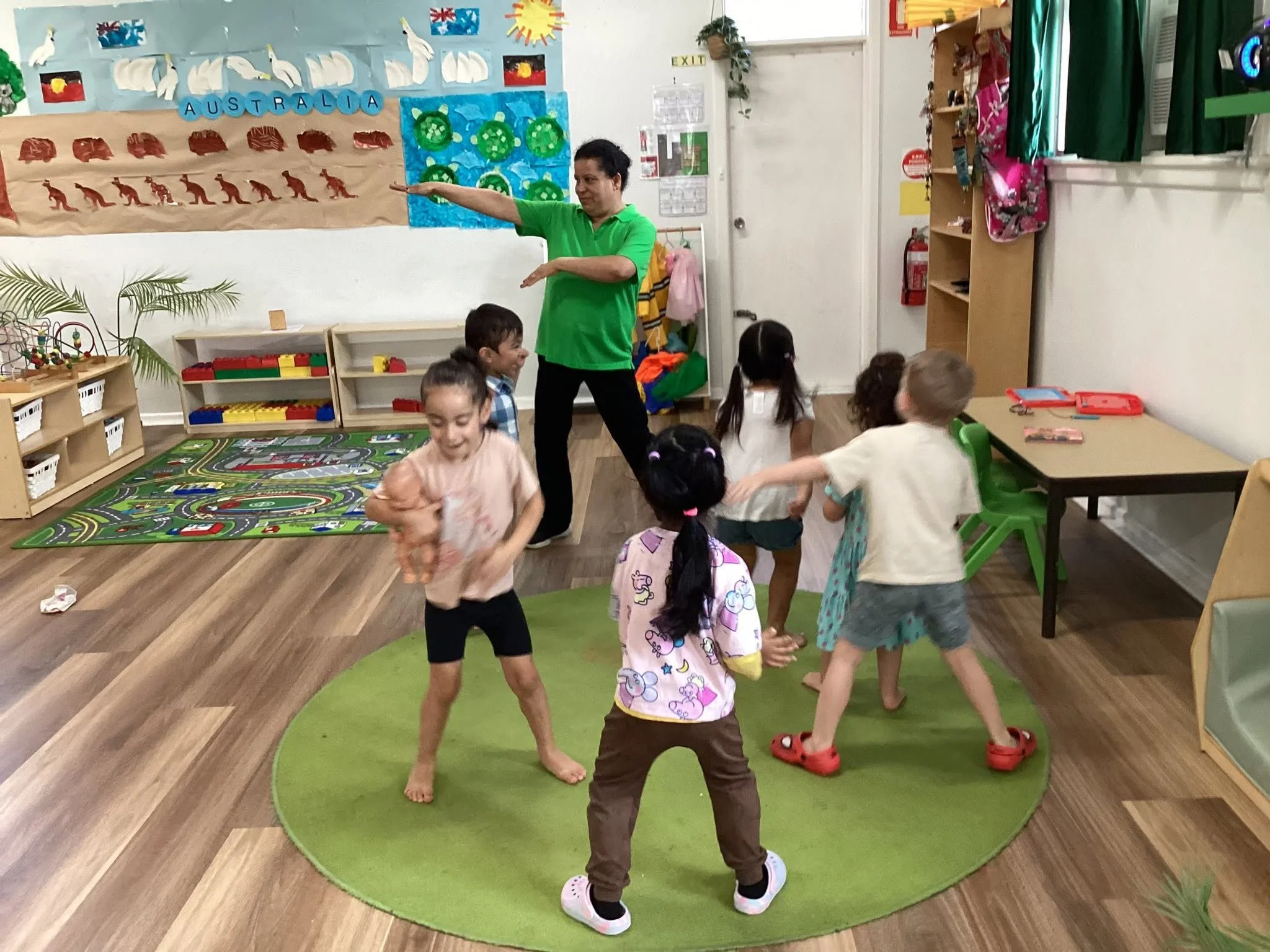
At Greystanes Preschool, music rarely stays still. It flows into movement, dance, and dramatic play, giving children the chance to express themselves physically as well as creatively. Singing and dancing together also builds a wonderful sense of community and belonging in the room — children who sing and move together build connection, and that connection makes preschool a place children genuinely want to be.
Bringing Music Home
Families don't need instruments at home to extend this learning — singing in the car, clapping rhythms while cooking, or listening to a variety of music styles together are all meaningful ways to nurture musical curiosity. If your child has a favourite song from preschool, ask them to teach it to you — you might be surprised how much they know.
Learning That Sounds Like Fun
Music and creative arts remind us that the best learning doesn't always look like learning at all. If you'd like to see how music comes alive in our rooms, get in touch with our team to arrange a visit — we'd love to show you around.
Music is one of the earliest forms of communication children engage with, long before they can hold a pencil or sound out a word. Singing, moving to a beat, and exploring sounds all stimulate brain development in ways that support language, memory, coordination, and emotional regulation — making music one of the most efficient learning tools available in a preschool setting.